Showing posts with label videos. Show all posts
Showing posts with label videos. Show all posts
Tuesday, May 1, 2012

Sunday, April 29, 2012
B.S.
Here's the video of Jon Stewart interviewing Harry Frankfurt about his book On Bullshit (which you can read online for free here).
What do you think? Is not caring about whether you're telling the truth worse than deliberately lying?
What do you think? Is not caring about whether you're telling the truth worse than deliberately lying?
Monday, April 23, 2012
Changing Habits
"If you want to change a habit, …don’t try and change everything at once. Instead, figure out what the cue is, figure out what the reward is and find a new behavior that is triggered by that cue and delivers that same reward. "
— Charles Duhigg, author of The Power of Habit, on Fresh Air
Less Wrong has several great posts on effective techniques for breaking bad habits and replacing them with better ones:
- The Science of Rationality
- Scientific Self-Help: The State of Our Knowledge
- Build Small Skills in the Right Order
- How to Beat Procrastination
Sunday, April 22, 2012
Status Quo Bias
Lazy, inert humans:
- If it already exists, we assume it's good.
- Our mind works like a computer that depends on cached responses to thoughtlessly complete common patterns.
- NYU psychologist John Jost does a lot of work on system justification theory. This is our tendency to unconsciously rationalize the status quo, especially unjust social institutions. Scarily, those of us oppressed by such institutions have a stronger tendency to justify their existence.
- Jost has a new book on this stuff. Here's a video dialogue about his research:
Friday, April 13, 2012
Jock Math
Statistics in sports is all the rage lately. Here are some links on the topic.
- Statistical analysis can justify counterintuitive decisions, like going for it instead of punting on 4th down... though don't expect the fans to buy that fancy math learnin'.
- There are a lot of odd statistical myths about what happens on the day of the Super Bowl that deserve to be debunked.
- "Realistic Announcer Shouting How Kevin Durant Making His Last 4 Shots Has No Bearing On Whether He Will Make Next Shot"
- "Cornell Drains Fun Out Of Cinderella Run By Explaining How On A Long Enough Timeline The Improbable Becomes Probable"
- That radio show I love recently devoted an entire episode to probability:
- That other radio show I love ran a great 2-part series on the screening for diseases called "You Are Pre-Diseased":
- Here's a cool visualization of the president's promise to cut $100 million from the U.S. budget:

Monday, April 9, 2012
Rationalizing Away from the Truth
A big worry that the confirmation and disconfirmation biases raise is the difficulty of figuring out what counts as successful, open-minded reasoning, versus what amounts to after-the-fact rationalization of preexisting beliefs. Here are some links on our tendency to rationalize rather than reason:
- Recent moral psychology suggests that we often simply rationalize our snap moral judgments. (Or worse: we actually undercut our snap judgments to defend whatever we want to do.)
- The great public radio show Radio Lab devoted an entire show to the psychology of our moral decision-making:
- Humans' judge-first, rationalize-later approach stems in part from the two competing decision-making styles inside our heads.
- For more on the dual aspects of our minds, I strongly recommend reading one of the best philosophy papers of 2008: "Alief and Belief" by Tamar Gendler.
- Here's a video dialogue between Gendler and her colleague (psychologist Paul Bloom) on her work:
Saturday, April 7, 2012


Thursday, April 5, 2012
Filling in Memory
Here's a section (pages 78-80) from psychologist Dan Gilbert's great book Stumbling on Happiness about how memory works:
The preview cuts off at the bottom of page 80. Here's the rest from that section:
Fine. Here's Dan Gilbert on The Colbert Report:
The preview cuts off at the bottom of page 80. Here's the rest from that section:
"...reading the words you saw. But in this case, your brain was tricked by the fact that the gist word--the key word, the essential word--was not actually on the list. When your brain rewove the tapestry of your experience, it mistakenly included a word that was implied by the gist but that had not actually appeared, just as volunteers in the previous study mistakenly included a stop sign that was implied by the question they had been asked but that had not actually appeared in the slides they saw.Too many words, Sean! Can't you just put up a video? You better make it funny, too!
"This experiment has ben done dozens of times with dozens of different word lists, and these studies have revealed two surprising findings. First, people do not vaguely recall seeing the gist word and they do not simply guess that they saw the gist word. Rather, they vividly remember seeing it and they feel completely confident that it appeared. Second, this phenomenon happens even when people are warned about it beforehand. Knowing that a researcher is trying to trick you into falsely recalling the appearance of a gist word does not stop that false recollection from happening."
Fine. Here's Dan Gilbert on The Colbert Report:
Tuesday, April 3, 2012
Misidentification
Here's an excellent, short video explanation of the unreliability of memory that ends with a dog licking peanut butter off a guy's face:
And here's a more serious video on the tragedy of misidentifying a suspect:
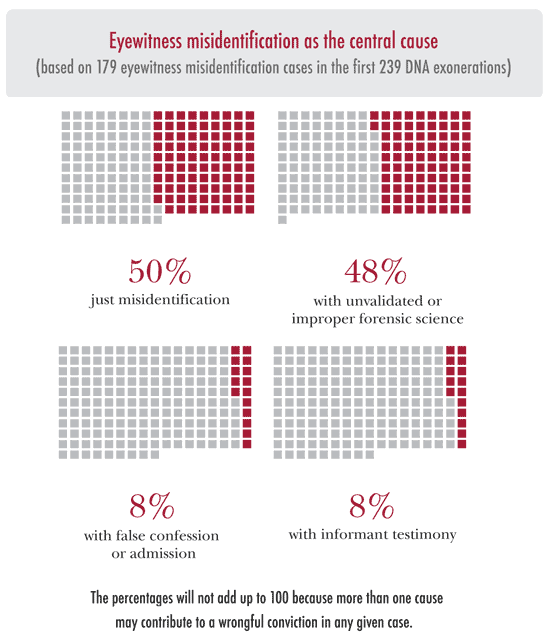
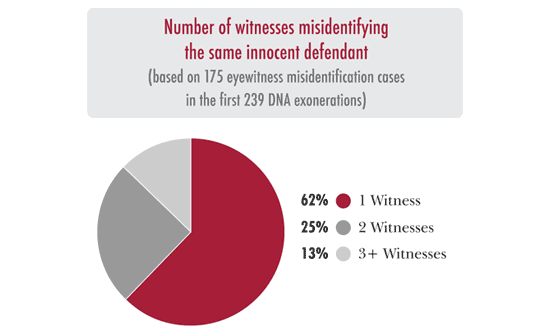
And here's a more serious video on the tragedy of misidentifying a suspect:
Monday, April 2, 2012
Direct Experience
Here are two videos on stuff we're talking about in class this week. First, watch this:
Next, watch this:
Finally, here's an article on this issue. Still trust your direct experience?
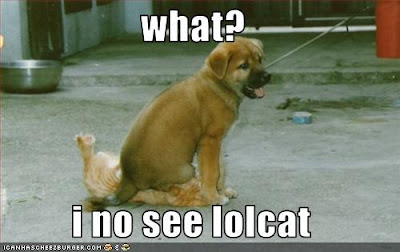
Next, watch this:
Finally, here's an article on this issue. Still trust your direct experience?
Saturday, March 31, 2012
Thursday, March 29, 2012
An Expert for Every Cause
Looking for links on appealing to authority? This is your post! First, here's an interesting article on a great question: How are those of us who aren't experts supposed to figure out the truth about stuff that requires expertise?
Not all alleged experts are actual experts. Here's a method to tell which experts are phonies (this article was originally published in the Chronicle of Higher Education).
We should judge experts who are into making predictions on how accurate their predictions turn out. Well, most experts are really bad at predicting.
It's important to check whether the person making an appeal to authority really knows who the authority is. That's why we should beware of claims that begin with "Studies show..."
And here's a Saturday Night Live sketch in which Christopher Walken completely flunks the competence test.
Not all alleged experts are actual experts. Here's a method to tell which experts are phonies (this article was originally published in the Chronicle of Higher Education).
We should judge experts who are into making predictions on how accurate their predictions turn out. Well, most experts are really bad at predicting.
It's important to check whether the person making an appeal to authority really knows who the authority is. That's why we should beware of claims that begin with "Studies show..."
And here's a Saturday Night Live sketch in which Christopher Walken completely flunks the competence test.
Thursday, March 15, 2012
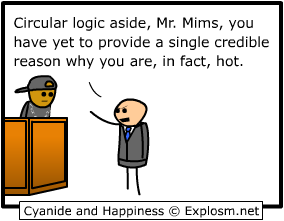
Begging the Hot
 I couldn't resist giving you some stuff on begging the question:
 - Here's a psychology paper (pdf) about the success of offering question-begging reasons to use a copier. The psychologists dubbed these nonsense reasons "placebic information."
- Warning: my explanation of that study is a bit oversimplified. Here's an excellent explanation of what the study actually showed in the service of a larger point: even the most careful of us unintentionally distort and oversimplify the results of scientific studies.
- Here's a video for Mims's logically delicious song "This is Why I'm Hot":
Tuesday, March 13, 2012
Let's Be Diplomatic: Straw Person

 Here's some stuff on the straw man fallacy:
- Politicians love to distort their opponents' positions. Even Obama does it.
- Politicians aren't alone: we do it, too. Often we distort arguments for claims we disagree with without even realizing it. This is because we have trouble coming up with good reasons supporting a conclusion that we think is false, so we have a tendency to make up bad reasons and attribute them to our opponents.
- Hire your own professional straw man!
- Here's the Critical Thinker's video explanation of the straw figure fallacy:
- I recommend the Critical Thinker's podcast.

Clever.
Sunday, March 11, 2012
That's an Ad Hominem, Jerk
Here are some links on the ad hominem (personal attack) fallacy:
- Sure, some critics of Obama are racist, but does that mean we can dismiss their arguments? As much as we might want to, logically, no we cannot!
- Some variants on the personal attack: tu quoque (hypocrite!) and guilt by association (she hangs around bad people!).
- I should note that tu quoque isn't always fallacious reasoning.
- "The ad hominem rejoinders—ready the ad hominem rejoinders!"
- Remember our rallying cry: "STUPID PEOPLE SOMETIMES SAY SMART THINGS."
Friday, February 24, 2012
Child Abduction
Psychologist Alison Gopnik gave a great TED talk recently on how children are natural abductive reasoners; playing and making pretend is often about coming up with and testing various hypotheses. Here's the talk:
Gopnik's book, The Philosophical Baby, is great.
Gopnik's book, The Philosophical Baby, is great.
Saturday, February 18, 2012
The Full Moon Myth
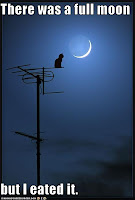 We talked about this on Tuesday: Scientific American has a nice article examining the widely-held belief that the full moon causes strange behavior. Research suggests the full moon doesn't have this effect:
"By combining the results of multiple studies and treating them as though they were one huge study—a statistical procedure called meta-analysis—[scientists] have found that full moons are entirely unrelated to a host of events, including crimes, suicides, psychiatric problems and crisis center calls. In their 1985 review of 37 studies entitled 'Much Ado about the Full Moon,' which appeared in one of psychology’s premier journals, Psychological Bulletin, Rotton and Kelly humorously bid adieu to the full-moon effect and concluded that further research on it was unnecessary."One reason the belief persists is a set of natural human cognitive biases in which we perceive correlations where no such correlations exist:
"Illusory correlations result in part from our mind’s propensity to attend to—and recall—most events better than nonevents. When there is a full moon and something decidedly odd happens, we usually notice it, tell others about it and remember it. We do so because such co-occurrences fit with our preconceptions. ... In contrast, when there is a full moon and nothing odd happens, this nonevent quickly fades from our memory. As a result of our selective recall, we erroneously perceive an association between full moons and myriad bizarre events."We'll be discussing these biases more when we study arguments about causes. Here's a cool video by psychological Dan Gilbert on our mistaken expectations:
Friday, February 10, 2012
Inductioneering
Here are two dumb things about inductive arguments. First, a video of comedian Lewis Black describing his failure to learn from experience every year around Halloween:
Next, this stick figure comic offers a pretty bad argument. Why is it bad? (Let us know in the comments!)

Next, this stick figure comic offers a pretty bad argument. Why is it bad? (Let us know in the comments!)
Thursday, February 2, 2012



Wednesday, February 1, 2012

Subscribe to:
Posts (Atom)

